> For the complete documentation index, see [llms.txt](https://docs.xviz.com/llms.txt). Markdown versions of documentation pages are available by appending `.md` to page URLs; this page is available as [Markdown](https://docs.xviz.com/performance-management/card-formatting/customize-template.md).
# Customize Template
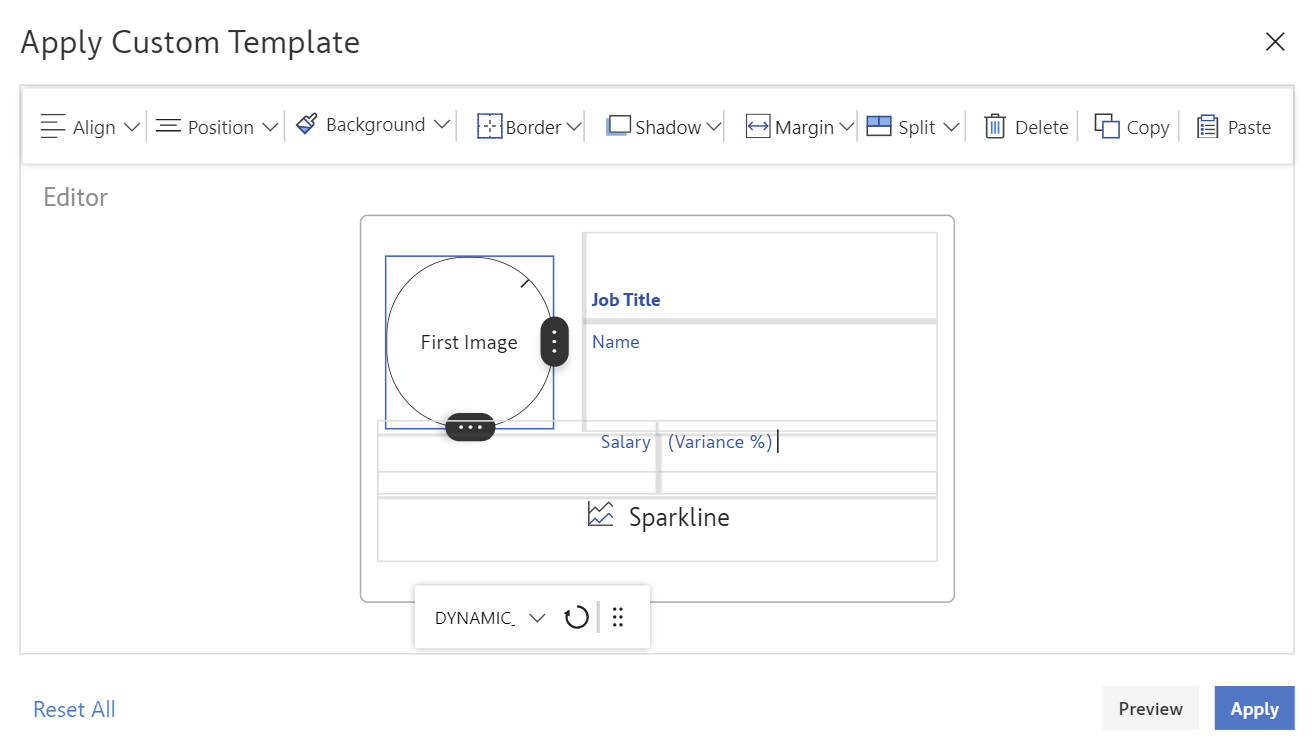
The xViz Performance Flow offers customized editing on predefined templates tailored to your preferences.
Image 1: Custom Template
{% hint style="danger" %}
Not supported when hierarchy is created using [/pages/uYwhBvTuSbkw6KIO6ZXo#id-2.-multiple-category-columns](https://docs.xviz.com/performance-management/card-formatting/pages/uYwhBvTuSbkw6KIO6ZXo#id-2.-multiple-category-columns "mention") data structure
{% endhint %}
{% hint style="warning" %}
Note that clicking on another template will result in losing the edits made in the existing template. It is strongly advised to export the customized template immediately after making the changes to avoid any rework.
Refer [Import/Export](/performance-management/card-formatting/customize-template/import-export.md) to export the customized template.
{% endhint %}
### Steps to do custom editing on predefined template
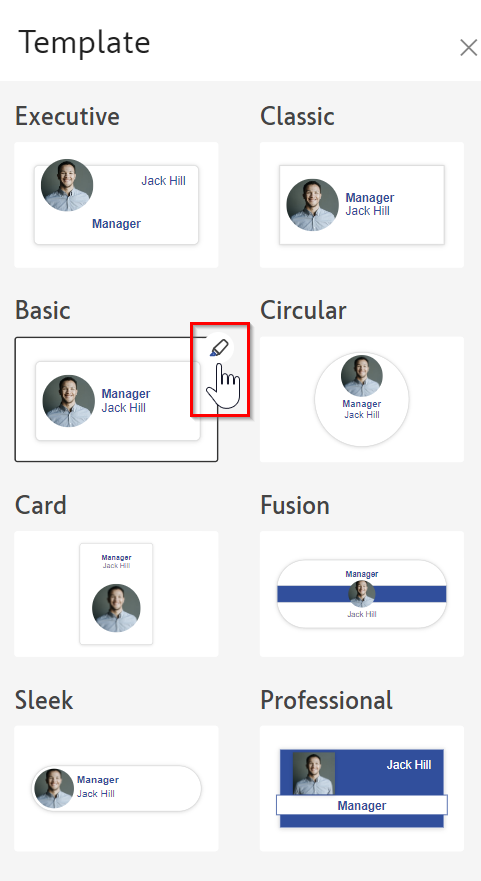
1. Navigate to the “Template” option in the top ribbon.
Image 2: Template option in ribbon
2. Hover over the Template and Click on the "Marker" icon located at the top-right corner of the template.