# Expand Collapse Button

Utilize the Expand Collapse Button feature to enable or disable the expand and collapse functionality for the Id/Pid and Multiple category column structure. This feature allows for better control over the hierarchical structures.

<figure><img src="/files/9mcbTWDDReNzrwzM4Mnd" alt=""><figcaption><p>Image 1: Expand &#x26; Collapse functionality</p></figcaption></figure>

### Steps to Use Expand Collapse Button

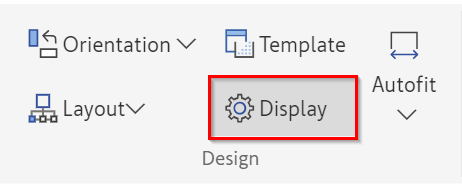
1. Navigate to the “Display” option in the top ribbon.

<figure><img src="/files/MyHJqCylrIQvKL6mLeB5" alt="" width="347"><figcaption><p>Image 2: Display option in ribbon</p></figcaption></figure>

2. Click on “Display” Tab and navigate to the “Navigation” option. Toggle the “Expand Collapse Button” option on or off according to your preference to enable or disable the expand and collapse functionality for the hierarchical structure.

<figure><img src="/files/4TeFSAbBJdipf6fS7uHi" alt="" width="278"><figcaption><p>Image 3: Expand Collapse Button</p></figcaption></figure>

After using the “Expand Collapse Button,” you will have control over the expand and collapse functionality for the hierarchical structure, as displayed below:

<figure><img src="/files/PezracdUF8C2yV9x6Ji3" alt=""><figcaption><p>Image 4: Expand &#x26; Collapse functionality</p></figcaption></figure>

### Show Node Count:

You can also show or hide the node count of the parent nodes in the visual by toggling the "Show Node Count" option below Expand Collapse Button, as shown below:

<figure><img src="/files/gwZqSO1LI5RvQmnhFVv6" alt=""><figcaption><p>Image 5: Node Count</p></figcaption></figure>

You can customize the display of node counts in the visual according to your preferences using the Node Count option. Additionally, you can change the color of the node counts.

### Node Count

The visual provides two options for displaying node counts, as mentioned below:

<table><thead><tr><th width="215">Node Count Type</th><th>Description</th></tr></thead><tbody><tr><td>All</td><td>Display the total node count of each node’s descendants, including all child node, grandchild node, and so on</td></tr><tr><td>Immediate</td><td>Display the total node count of only the child nodes for each node.</td></tr></tbody></table>

<figure><img src="/files/aSWkEfuMdV8p7pV7B0cE" alt="" width="274"><figcaption><p>Image 6: Node count options</p></figcaption></figure>

### Node Count Color

<figure><img src="/files/kpJNN1uIURAQDzlXKNjN" alt="" width="278"><figcaption><p>Image 7: Node count color</p></figcaption></figure>

The Node count is customized, as shown in the image below:

<figure><img src="/files/ts6FtBpo4R3YvmaFYQ5n" alt=""><figcaption><p>Image 8: Node count after customization</p></figcaption></figure>

{% hint style="info" %}
When the Expand Collapse Button is turned off, the "Show Node Count" toggle and the node counts for the parent nodes will not be visible.
{% endhint %}


---

# Agent Instructions: Querying This Documentation

If you need additional information that is not directly available in this page, you can query the documentation dynamically by asking a question.

Perform an HTTP GET request on the current page URL with the `ask` query parameter:

```
GET https://docs.xviz.com/performance-management/formatting-features/expand-collapse-button.md?ask=<question>
```

The question should be specific, self-contained, and written in natural language.
The response will contain a direct answer to the question and relevant excerpts and sources from the documentation.

Use this mechanism when the answer is not explicitly present in the current page, you need clarification or additional context, or you want to retrieve related documentation sections.