> For the complete documentation index, see [llms.txt](https://docs.xviz.com/llms.txt). Markdown versions of documentation pages are available by appending `.md` to page URLs; this page is available as [Markdown](https://docs.xviz.com/performance-management/search.md).
# ✨Search
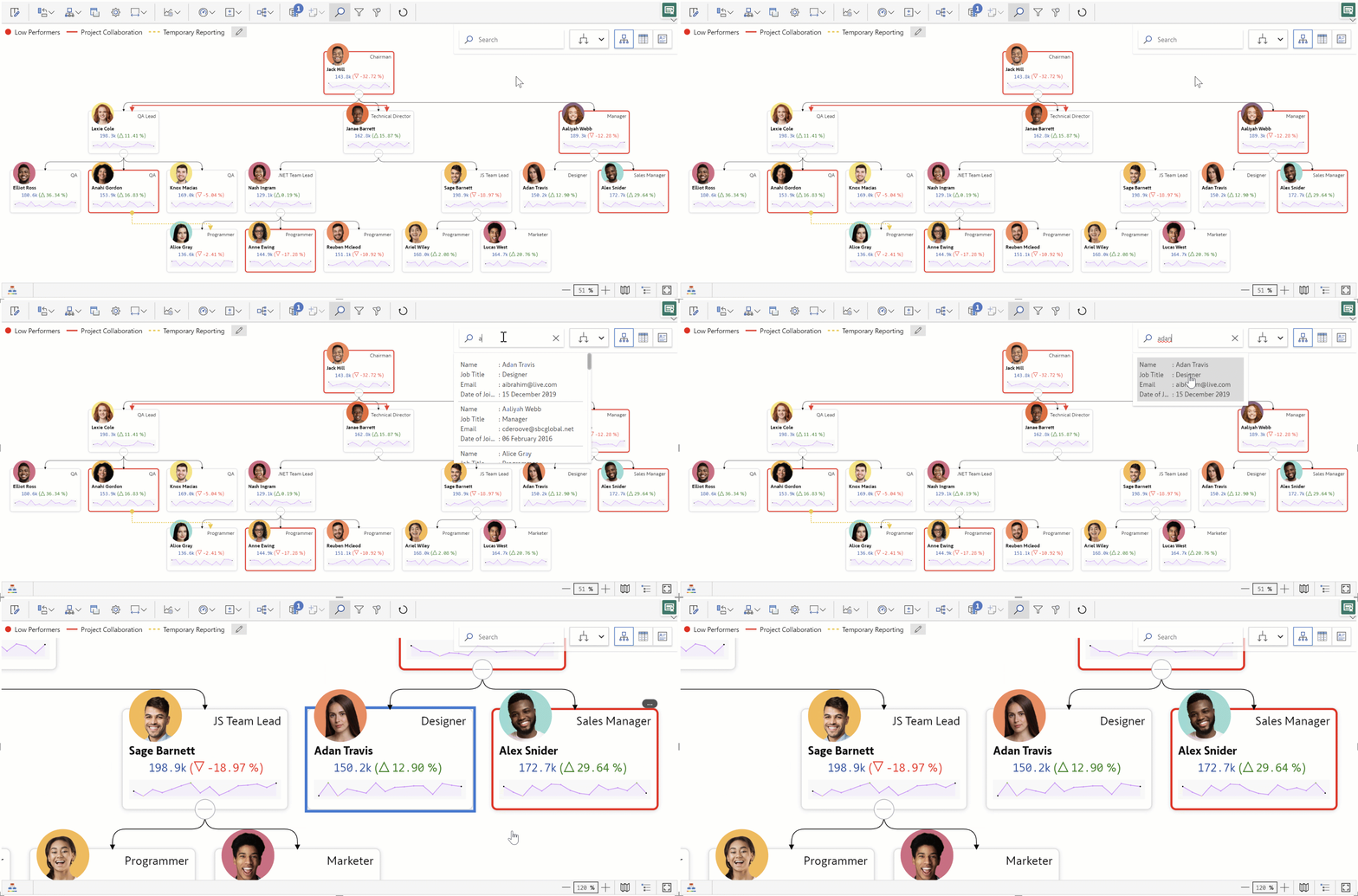
The xViz Performance Flow includes a search option to find specific text values within the hierarchical structure.
Image 1: Search functionality
### Steps to use Search functionality
1. Navigate to the “Search” option in the top ribbon and click on Search.
Image 2: Search option in ribbon
2. Search the employee's name into the search field and select the matching result.
Image 3: Enter the employee or category name
Afterward, the selected value node will be highlighted as shown in the image below:
Image 4: Node highlighted
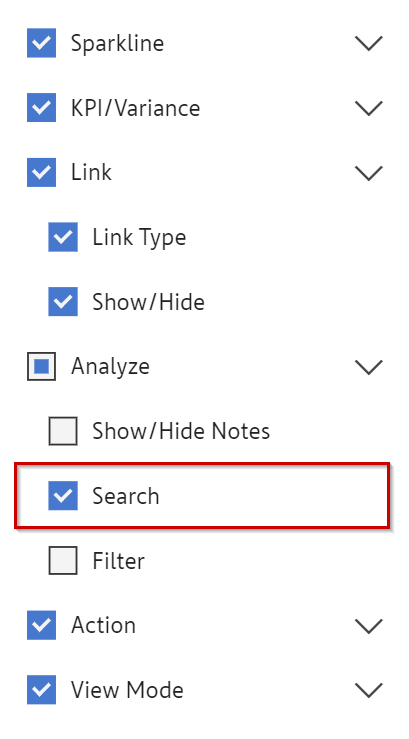
### Enable Serach Feature for report end-users:
To enable the Serach feature for report end-user, click on click on the downward arrow mark highlighted above from the extreme right corner of the visual and on "Allowed User Control".
Image 5: Allowed User Control
This feature allows developers to control the access of the Search options in the read view of Power BI service from report end users.
Image 6: Allowed Search Feature for report end user