# Hyperlinks

The xViz Performance Flow includes a hyperlink feature that allows users to navigate directly to relevant URLs within the hierarchical structure. Each node in the hierarchy can be assigned a unique hyperlink, enabling seamless access to external information of each node.

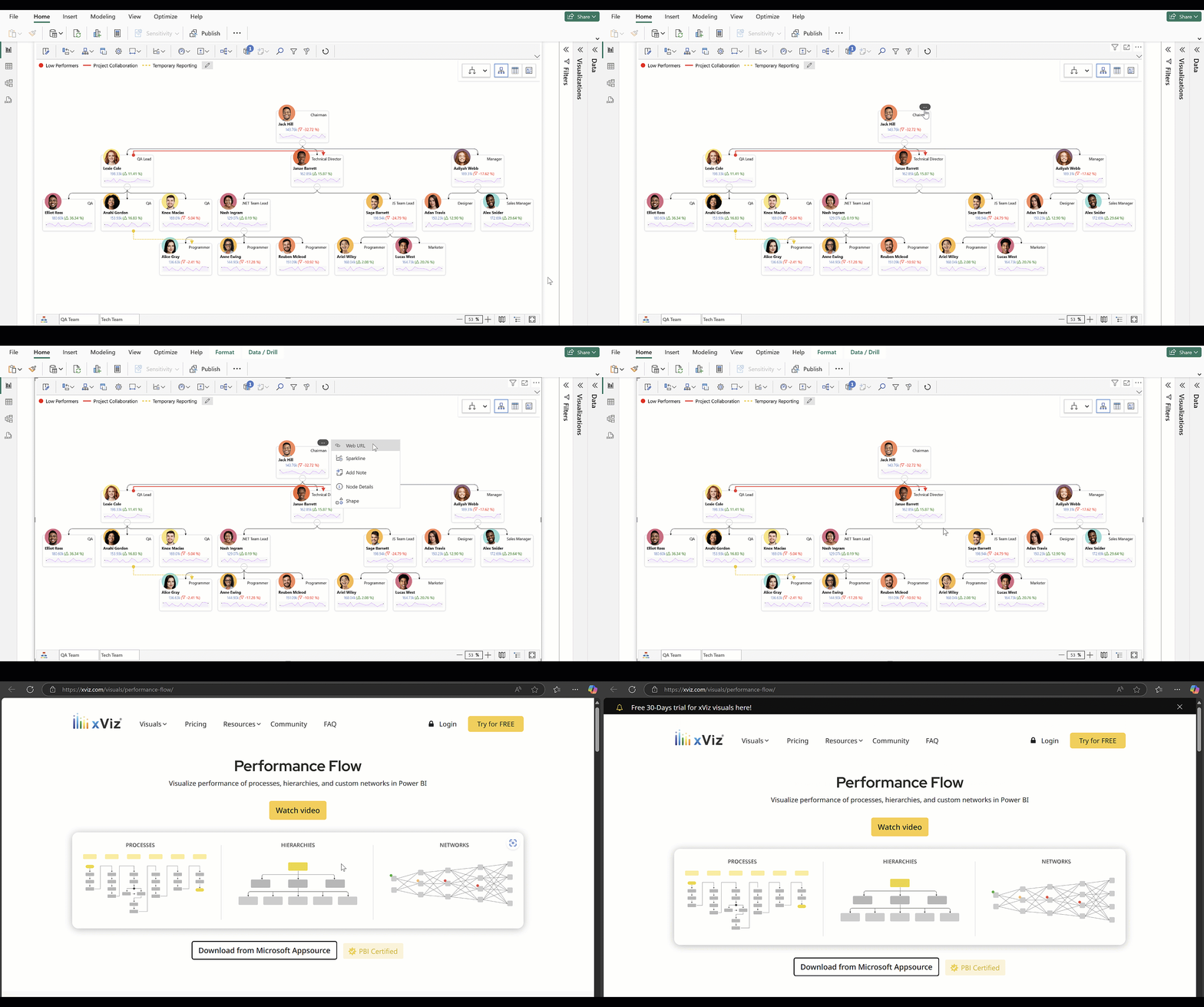
<figure><img src="/files/RyEKVkBEwQIVjdgBqC52" alt="" width="563"><figcaption><p>GIF 1: External Hyperlink in xViz Performance Flow</p></figcaption></figure>

To configure links in xViz Performance Flow, you must start with [#configuring-the-web-urls](#configuring-the-web-urls "mention") . You can further [#configure-hyperlinks-via-conditional-formatting](#configure-hyperlinks-via-conditional-formatting "mention")

### Configuring the Web URLs

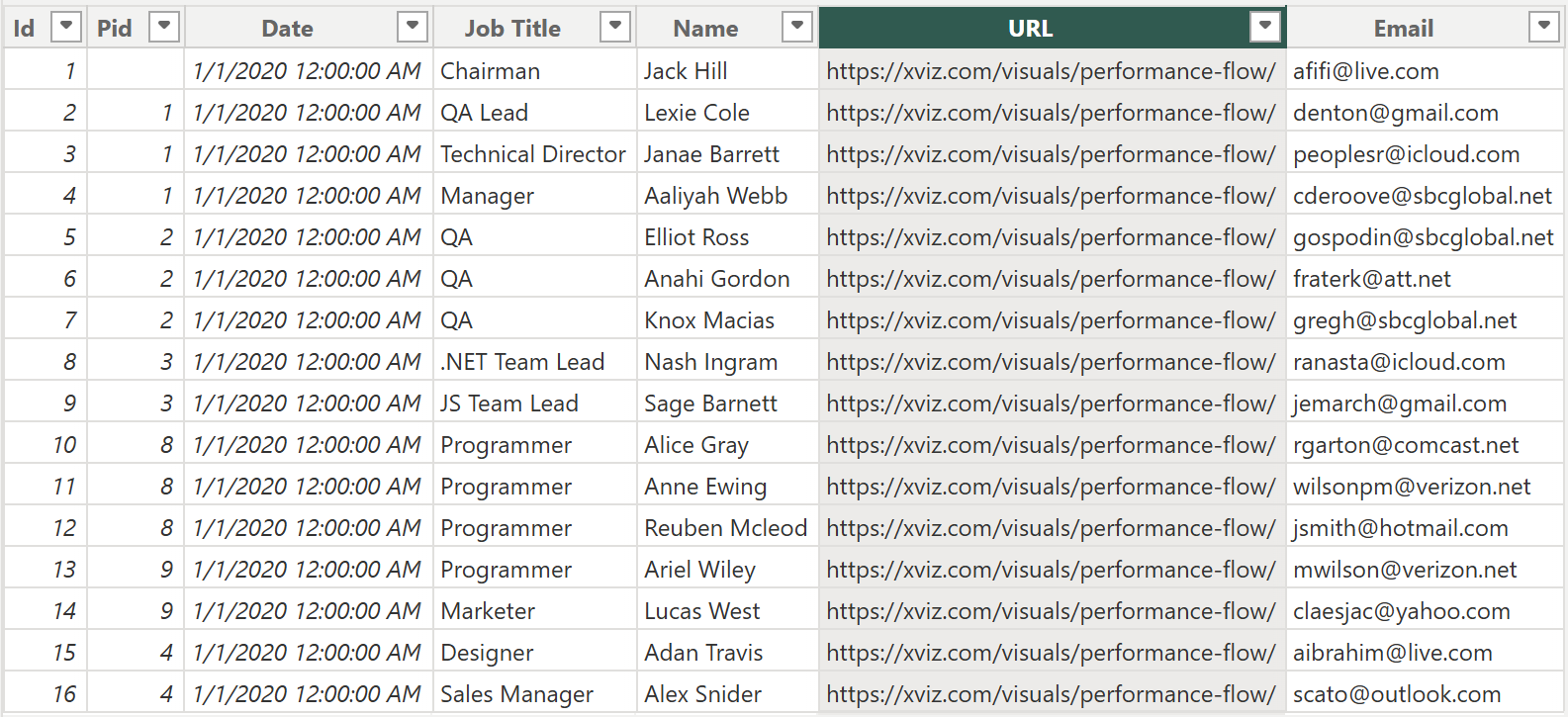
1. The URL column in the dataset is necessary to use the Hyperlink feature in the Performance Flow,

<figure><img src="/files/fOxTvdGRkuui155i55mx" alt="" width="563"><figcaption><p>Image 1: URL column in the dataset</p></figcaption></figure>

2. Ensure the URL column Data Category in the dataset is set to Web URL format to enable proper hyperlink functionality in Performance Flow as shown in the image below:

<figure><img src="/files/hSB4W2S9ZwJ4zORQirUq" alt="" width="563"><figcaption><p>Image 2: Set Data category as Web URL</p></figcaption></figure>

{% hint style="success" %}
For more details on how to change the Data category, here are the steps to [Format a URL as a hyperlink in Power BI Desktop](https://learn.microsoft.com/en-us/power-bi/create-reports/power-bi-hyperlinks-in-tables?tabs=powerbi-desktop#format-a-url-as-a-hyperlink-in-power-bi-desktop)
{% endhint %}

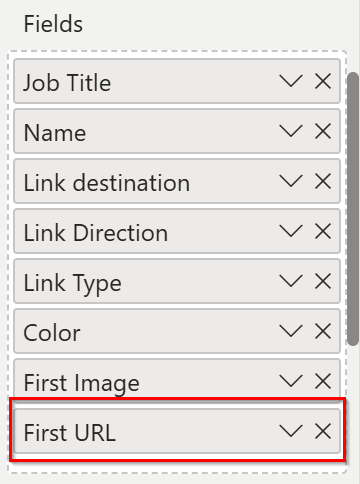
3. Populate the "URL" column in the "Fields" data field.

<figure><img src="/files/sRkZQH33fp91Yao24me9" alt="" width="180"><figcaption><p>Image 3: Populate the URL column</p></figcaption></figure>

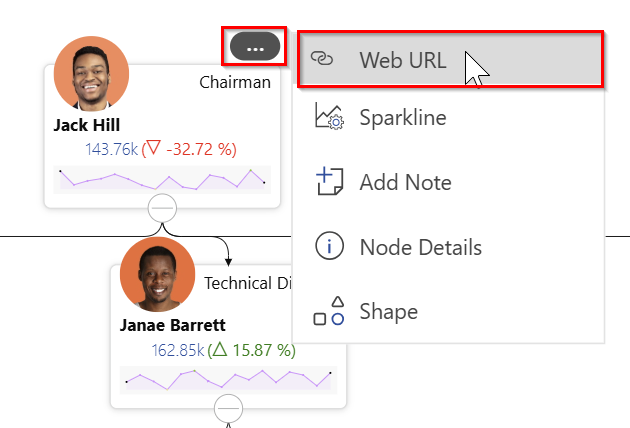
4. To access an external hyperlink for a specific node, hover over the node, click the ellipsis icon in the top-right corner, and select "Web URL" from the menu, as shown in the image below:

<figure><img src="/files/vMqRLSvwggt5GQ8zsX2x" alt="" width="315"><figcaption><p>Image 4: Web URL</p></figcaption></figure>

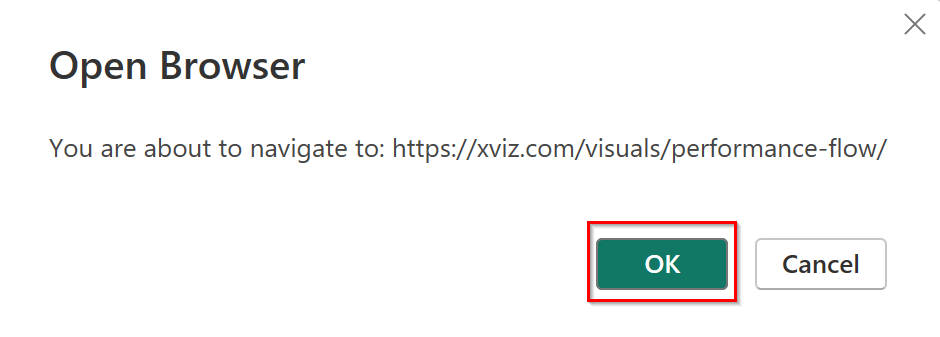
Finally, a pop-up titled **"**&#x4F;pen Browse&#x72;**"** will appear, simply click "OK" to proceed.

<figure><img src="/files/Aiv3qskyxRpU8BkH7yWE" alt="" width="375"><figcaption><p>Image 5: Open Browser</p></figcaption></figure>

As a result, clicking the "OK" will open the linked resource, providing additional insights related to the selected node, as shown below:

<figure><img src="/files/RyEKVkBEwQIVjdgBqC52" alt="" width="563"><figcaption><p>GIF 2: External Hyperlink in xViz Performance Flow</p></figcaption></figure>

### Configure Hyperlinks via Conditional Formatting

To embed the links within the node in the form of an icon or to embed on a text:

1. Click on "Conditional Formatting" option in the "Analyze" section of the top ribbon:

<figure><img src="/files/q3mSUkNG6vqOaTKFgEap" alt="" width="274"><figcaption><p>Image 6: Click on Conditional Formatting</p></figcaption></figure>

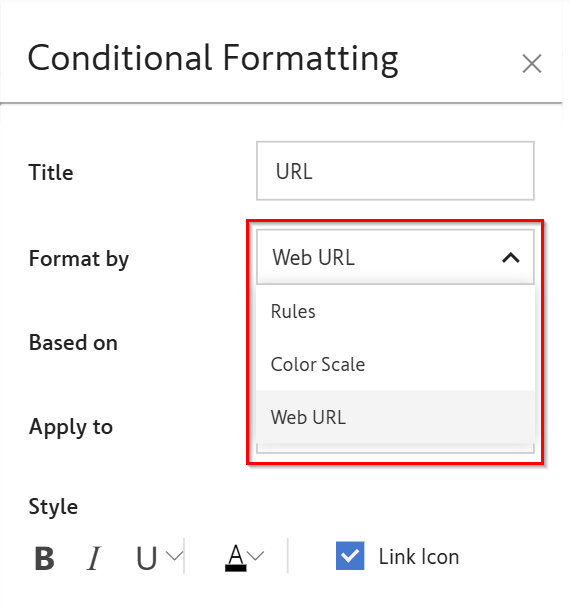
2. Add new rule and select the Format by as Wen URL as shown in the Image below:

<figure><img src="/files/HRIOrkQybYcV2VDXfN3s" alt="" width="285"><figcaption><p>Image 7: Format by Web URL in Conditional Formatting</p></figcaption></figure>

{% hint style="info" %}
The Web URL option in conditional formatting is available only when a column categorized as Web URL is populated.
{% endhint %}

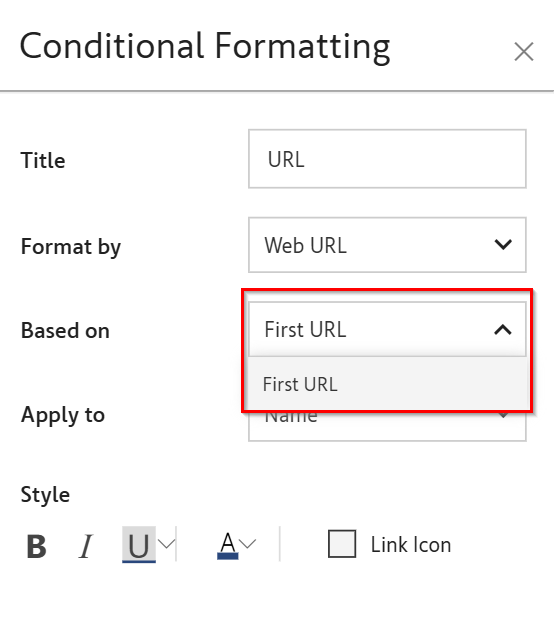
3. Select the URL column in the "Based on" option for the hyperlink condition as shown image below. You should select the URL column in this option:&#x20;

<figure><img src="/files/Cl83cMTR4jshck0tLGAb" alt="" width="277"><figcaption><p>Image 8: Select URL column using Based on option</p></figcaption></figure>

4. Select the column name in the "Apply to" option to set the column text in the node on which the hyperlink must appear, as shown in the image below:

<figure><img src="/files/ihBq0wcD8pFIGGe897kZ" alt="" width="274"><figcaption><p>Image 9: Select column to Apply hyperlink</p></figcaption></figure>

5. Configure the Style of the hyperlink as shown image below:

<figure><img src="/files/V6vjz6sJBAFD5AEem0mJ" alt="" width="273"><figcaption><p>Image 10: Style the hyperlink</p></figcaption></figure>

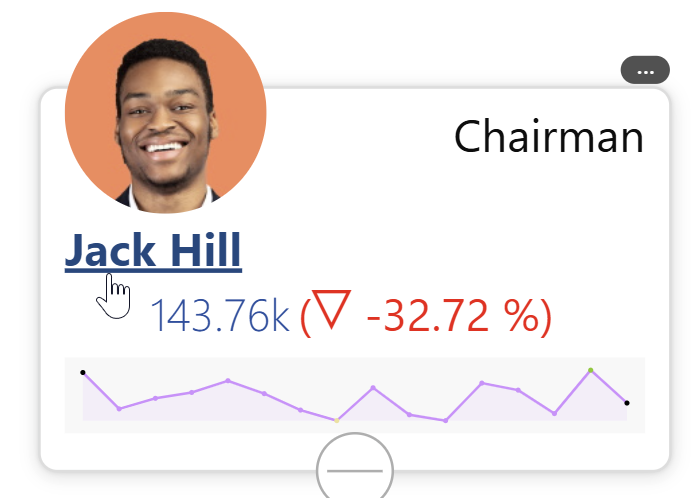
Next, click on the node text where the Web URL condition is applied as shown in the image below:

<figure><img src="/files/b4NZ9yza1d9YqJzdeGO3" alt="" width="349"><figcaption><p>Image 11: Click on hyperlink text</p></figcaption></figure>

Finally, a pop-up titled **"**&#x4F;pen Browse&#x72;**"** will appear, simply click "OK" to proceed.

<figure><img src="/files/Aiv3qskyxRpU8BkH7yWE" alt="" width="375"><figcaption><p>Image 12: Open Browser</p></figcaption></figure>


---

# Agent Instructions: Querying This Documentation

If you need additional information that is not directly available in this page, you can query the documentation dynamically by asking a question.

Perform an HTTP GET request on the current page URL with the `ask` query parameter:

```
GET https://docs.xviz.com/performance-management/display-data-in-the-cards/hyperlinks.md?ask=<question>
```

The question should be specific, self-contained, and written in natural language.
The response will contain a direct answer to the question and relevant excerpts and sources from the documentation.

Use this mechanism when the answer is not explicitly present in the current page, you need clarification or additional context, or you want to retrieve related documentation sections.