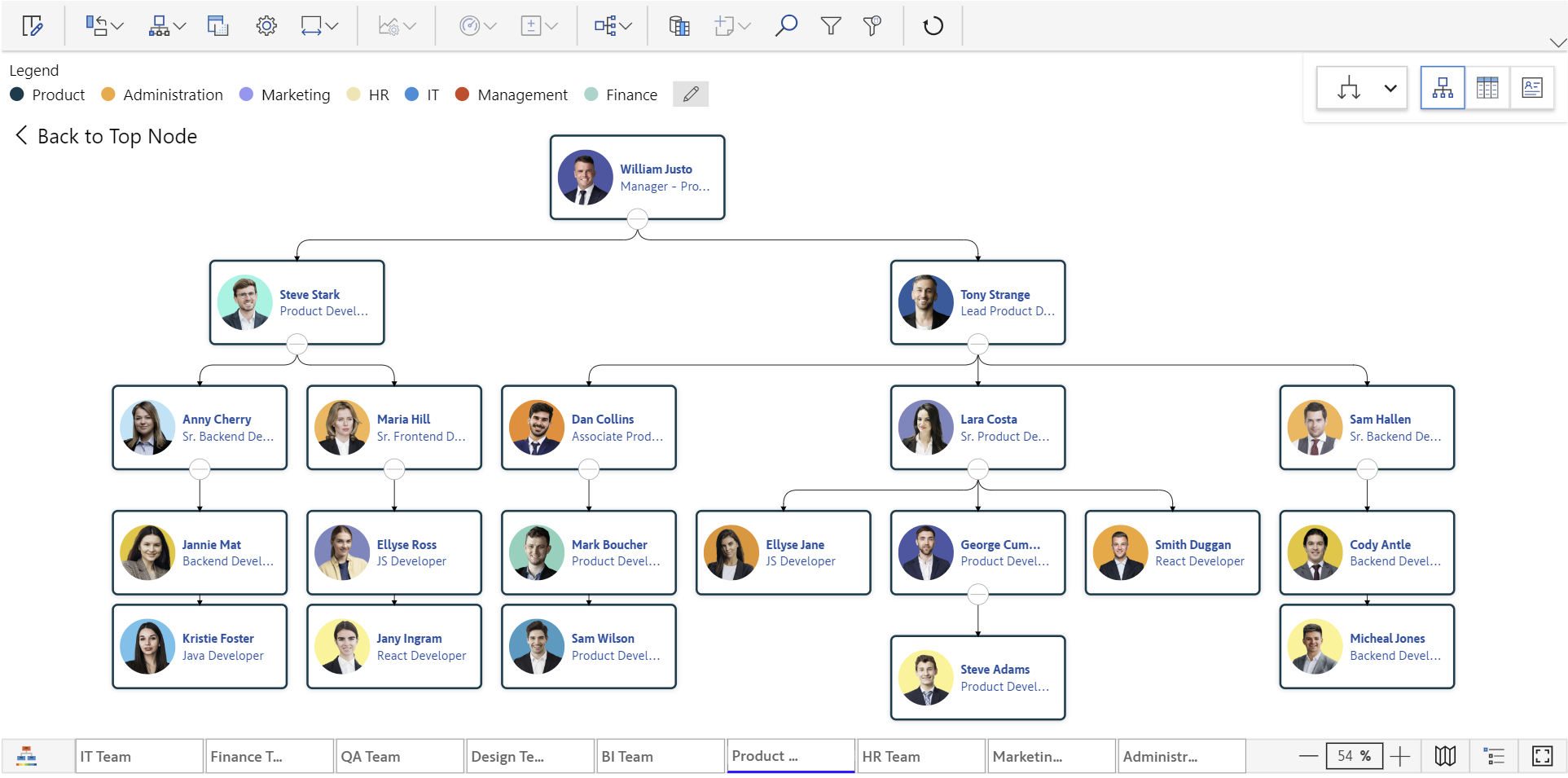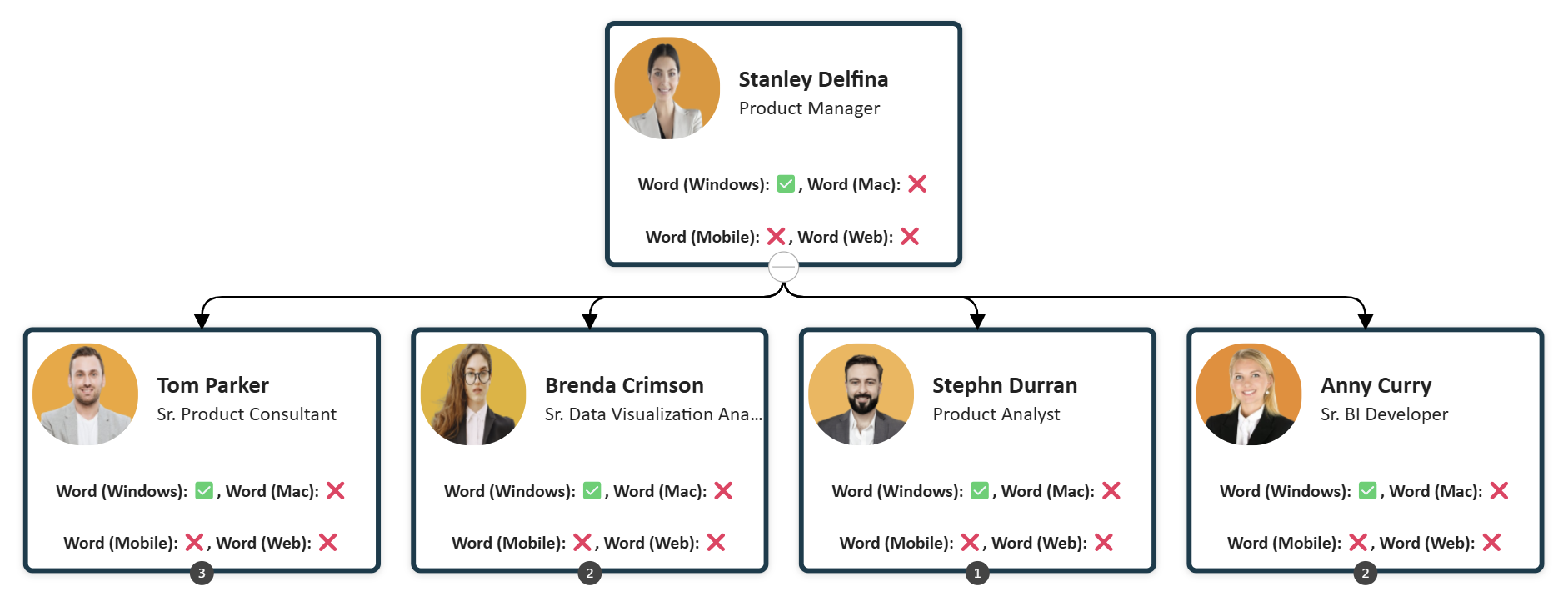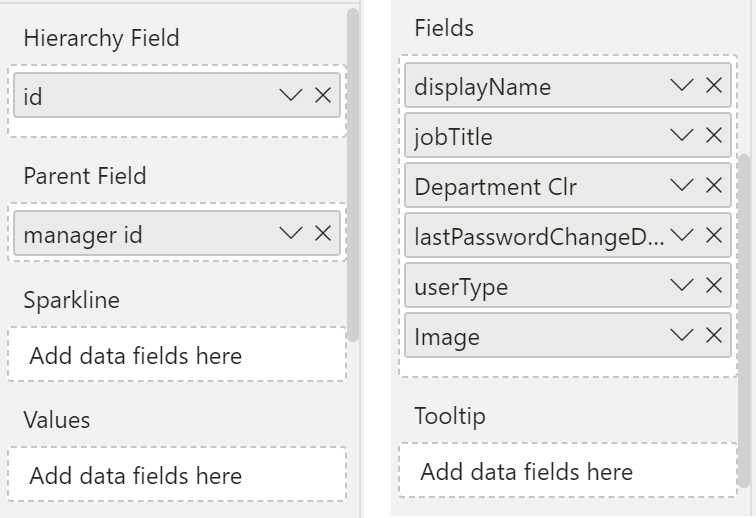
> For the complete documentation index, see [llms.txt](https://docs.xviz.com/llms.txt). Markdown versions of documentation pages are available by appending `.md` to page URLs; this page is available as [Markdown](https://docs.xviz.com/performance-management/use-cases/microsoft-tenant-data-analytics.md).

# Microsoft Tenant Data Analytics

The xViz Performance Flow visual provides an interactive and intuitive way to analyze Microsoft Graph API for Tenant Data Analytics.

{% embed url="<https://xviz.com/demos/xviz-performance-flow-tenant-data-analytics/>" %}
Demo report | Microsoft Tenant Data Analytics using xViz Performance Flow
{% endembed %}

> Refer to the [Importing Microsoft Graph API with Power Query](/performance-management/use-cases/microsoft-tenant-data-analytics/organization-chart-using-microsoft-graph-api.md) documentation for guidance on fetching Microsoft Entra ID data into Power BI.

### Visualize the Microsoft Graph API using the xViz Performance Flow visual:

1. Now, import [xViz Performance Flow](https://appsource.microsoft.com/en-hk/product/power-bi-visuals/xviz.performanceflow-xviz?tab=Overview) from Microsoft AppSource into your report.

{% hint style="success" %}
If this is your first time working with custom visuals, then here are the steps to [import a custom visual from Microsoft AppSource](https://learn.microsoft.com/en-us/power-bi/developer/visuals/import-visual#import-a-power-bi-visual-directly-from-appsource).&#x20;
{% endhint %}

2. Next, populate the data fields in the visual with the relevant columns as shown below:

<figure><img src="/files/FoG1UMJIusRGyzT3byaN" alt="" width="375"><figcaption><p><em>Image 1: Populate data fields</em></p></figcaption></figure>

3. Navigate to the **Map Field** option in the top ribbon and map these newly populated columns to the **Map Field**, as shown in the image below:

<figure><img src="/files/t5eefvD0jBNQOQmuqCYP" alt="" width="332"><figcaption><p><em>Image 2: Map newly added column in the Map Field</em></p></figcaption></figure>

4. As a result, the organization chart is created using Microsoft Entra ID (formerly Azure Active Directory) data with the xViz Performance Flow Visual in Power BI.

<figure><img src="/files/TGjWq4NybDZF4fNrQNNF" alt="" width="563"><figcaption><p><em>Image 3: Organization Chart in xViz Performance Flow</em></p></figcaption></figure>

{% hint style="danger" %}
The data presented in the report is a sample dataset created for demonstration purposes. It closely resembles the data obtained from Microsoft Entra ID (formerly known as Azure Active Directory).
{% endhint %}

The visual provides powerful insights for analyzing Microsoft Tenant Data with the following features:

### 1. KPI & Variance:

The visual displays the storage used on each employee card, providing a clear overview of individual usage. By incorporating the allocated storage, it automatically calculates the variance, allowing for quick insights into storage discrepancies directly on the card.

<figure><img src="/files/idsWSkGk4Z05TosurzzJ" alt="" width="563"><figcaption><p><em>Image 4: KPI &#x26; Variance in xViz Performance Flow</em></p></figcaption></figure>

> For detailed information on displaying KPIs and their variance on employee cards, refer to this documentation - [KPI & Variance](/performance-management/display-data-in-the-cards/displaying-variance.md)

### 2. Conditional Formatting:

Conditional formatting in the Performance Flow visual enables the identification and highlighting of IT-related issues, such as low storage, through customizable data-driven rules. For example, employee cards can be marked with a warning sign or a red border when storage usage exceeds a set threshold. Additionally, other rules and formatting options can be applied to tailor the visual appearance based on specific IT performance criteria.

<figure><img src="/files/0rmhG5wM4HJn5P8t8Na5" alt="" width="563"><figcaption><p><em>Image 5: Conditional Formatting in xViz Performance Flow</em></p></figcaption></figure>

> For detailed information on Conditional Formatting, which allows you to highlight nodes based on specific conditions, refer to this documentation - [Conditional Formatting](/performance-management/conditional-formatting.md)

### 3. Custom Template:

Custom templates with advanced DAX techniques simplify app usage tracking and license management, enabling easy monitoring, optimization, and allocation of resources.

<figure><img src="/files/7xneAiRCkejpXeCbjatL" alt="" width="563"><figcaption><p><em>Image 6: Custom Template in xViz Performance Flow</em></p></figcaption></figure>